Did you know gift cards remain one of the most demanded holiday gifts each year, with the sales crossing the $200 billion mark? Prepaid vouchers are not only for last-minute gifts or for big-box business anymore. Whether you run a local boutique, a coffee shop, or an online service provider, if you learn how to use gift cards for your business, you can make the smartest financial move in 2026.
- Why Start a Gift Card Program for Your Small Business?
- Boost Brand Awareness and Customer Loyalty
- How to Get Gift Cards for Your Business: Step-by-Step
- Find a Reliable Gift Card Vendor
- Design Your Custom Gift Cards
- How Much Does It Cost to Start a Gift Card Program?
- How to Promote and Sell Your Gift Cards Successfully
- Why Choose EZ PIN as Your Gift Card Distributor?
- Frequently Asked Questions (FAQs)
Below, we will delve into exactly how to set up a small business gift card program. We also help you choose between physical and digital formats, and assist you in the journey of finding the right gift card supplier.
Why Start a Gift Card Program for Your Small Business?
Before diving into the strategies, let’s look at the “why.” Adopting a gift card program offers more than just convenience for your shoppers. As a gift card provider, you directly affect the revenue channels. Here are the most significant upsides:
Immediate Up-Front Cash Flow
As a customer acquires a gift card, whether it is a direct voucher like a Visa Virtual gift card or a specific platform such as a Spotify gift card or a Netflix gift card, your business gets the cash instantly.
This way, your cash flow is boosted, and the customers receive their product instantly.
Boost Brand Awareness and Customer Loyalty
They are genuinely the perfect marketing tool. If your loyal customers purchase a gift card for their family and friends, they are advocating for your brand. For more info on customer loyalty programs, you can read EZ PIN’s special take.
The advantage is that prepaid vouchers naturally integrate into any customer loyalty incentive campaign. You can give people reasons to return to the store or the online platform to spend more time and money than the actual card’s balance.
How to Get Gift Cards for Your Business: Step-by-Step
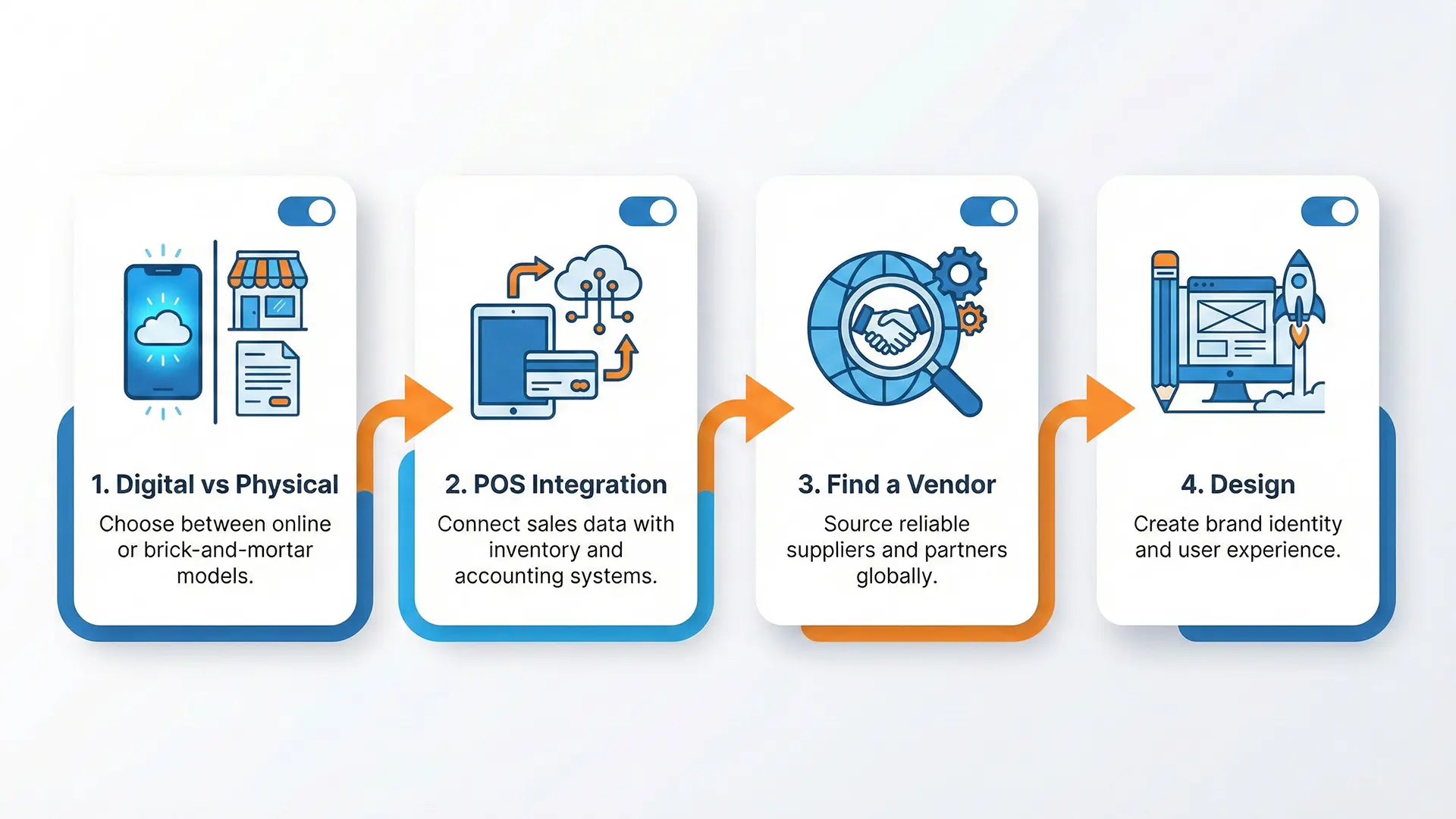
Starting an SMB gift card program is way easier than a lot of people think. You can easily do it by following these four simple steps:
Choose Between Physical and Digital eGift Cards
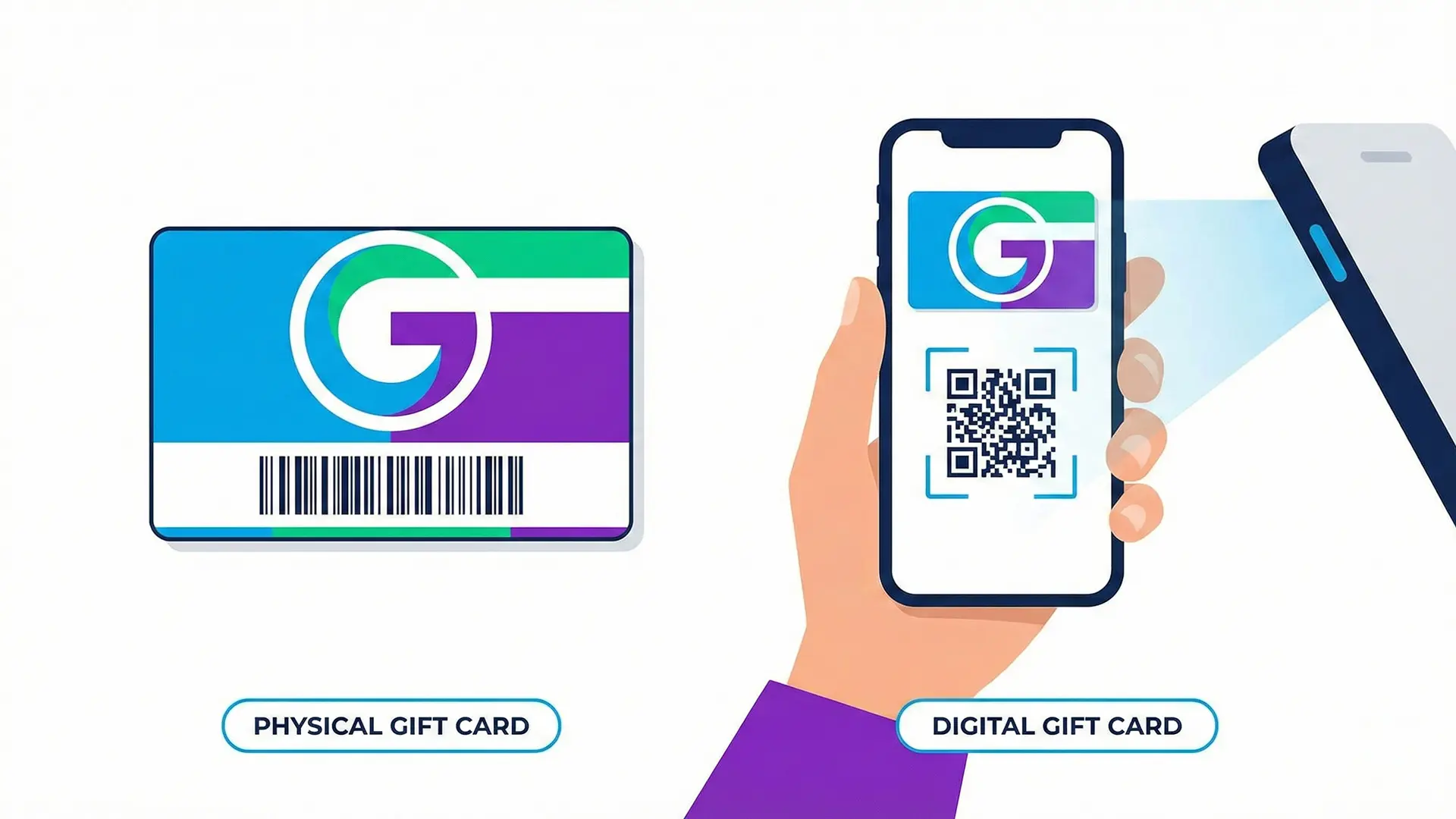
First, decide on the format you are going to work with. Physical gift cards work out great, especially for brick-and-mortar stores, where they can promote them at the checkout counter.
On the other hand, digital gift cards are deliverable via email or SMS. They can be easily added to digital wallets like Apple Pay or Google Wallet.
Ensure POS (Point of Sale) Compatibility
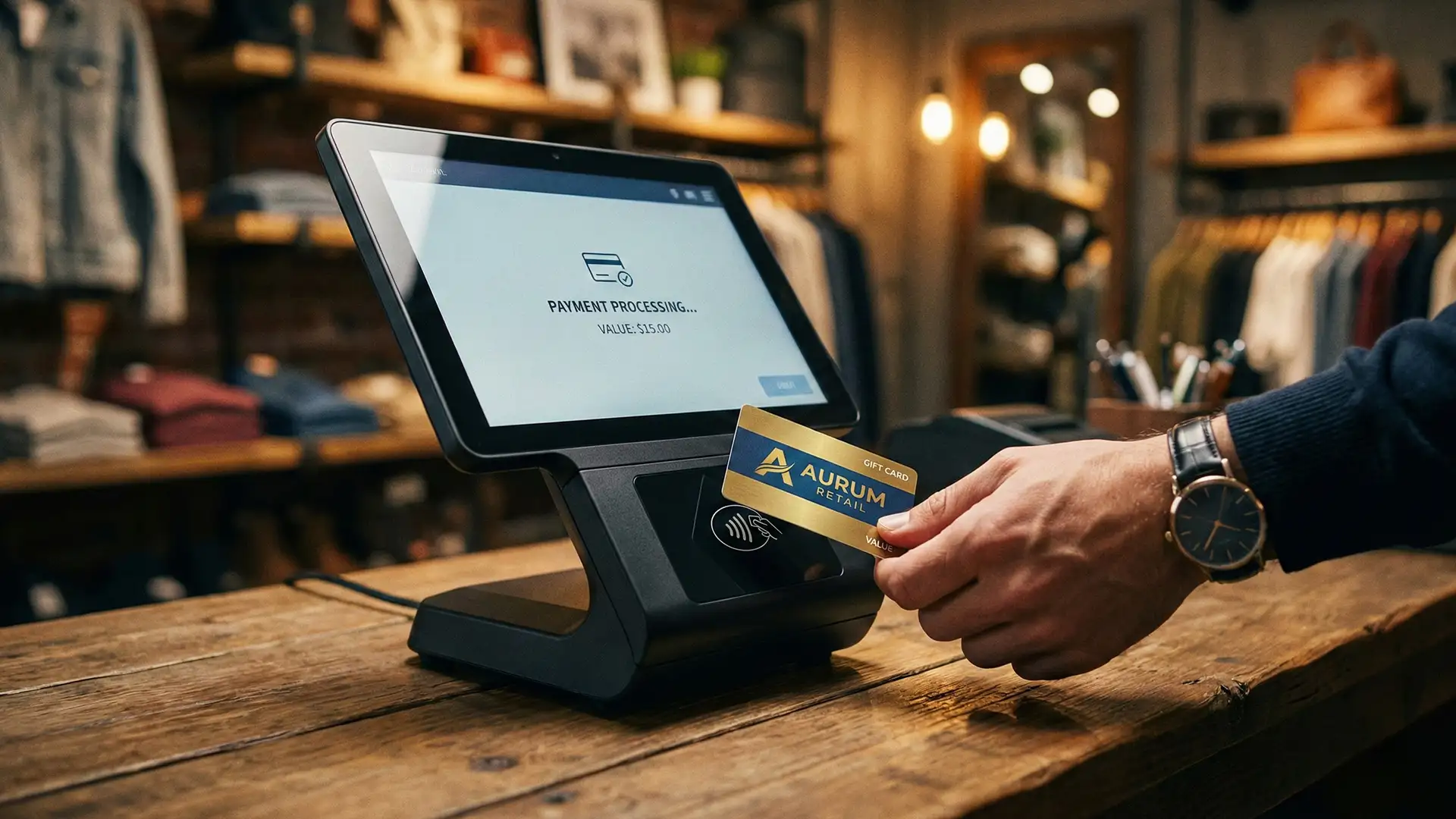
The gift cards should definitely work out great with your existing POS or Point of Sale System. Proper POS integration ensures you have the ability to track balances, process redemptions without manual errors, and prevent fraud and scams.
Find a Reliable Gift Card Vendor
Reliable partners are those who understand fulfillment and distribution. Reliable suppliers, like EZ PIN, will not print out cards for you. They are a multi-dimensional platform that provides software, Agentic AI, and API-based reselling. This means all you need to do is activate and manage your revenue flow.
You must look for a vendor that offers dedicated support, secure servers, and flexible pricing models.
Design Your Custom Gift Cards
The pocket-sized gift cards are little billboards for the brand. You should work with vendors who provide you with the best customization options for you. Whether they can design the features of your logo, brand colors, or even negotiate with specific service providers, your supplier must cater to your needs.
Do not forget to pay attention to the terms and conditions, the website URL, and instructions on how to check the balance on the back. Even a redemption guide can help your clients or employees.
[Image Placeholder 2: Infographic]
How Much Does It Cost to Start a Gift Card Program?
Well, right off the bat, the cost of the operation depends on your chosen approach. For digital gift cards, the upfront costs are very low. They often require a small monthly fee for the software (API) only.
For physical ones, you need to pay for the design, printing (whether on plastic or eco-friendly papers, …), and shipping fees. Generally speaking, printing gift cards ranges from $0.50 to $1.50 per card. For such an approach, you have to account for a one-time POS integration system. The fees also depend on the provider.
How to Promote and Sell Your Gift Cards Successfully
Acquiring the cards is only half the way. Selling them is the real deal. Here are a couple of strategies you can implement:
- In-Store Visibility: Place physical cards in high-traffic areas, specifically right next to the cash register.
- Website Pop-ups: Use a banner or pop-up on your homepage promoting your new digital gift cards, especially before major holidays.
- Social Media Campaigns: Run targeted ads showcasing your gift cards as the perfect last-minute gift solution.
Why Choose EZ PIN as Your Gift Card Distributor?
If you are looking for the ultimate provider, EZ PIN is your industry-leading partner. We in EZ PIN specialize in secure, easy, straightforward, scalable gift card solutions for businesses and companies.
From seamless API and POS integrations to crafted custom cards, we provide everything you need to unlock new revenue channels.
Ready to boost your sales? Contact the EZ PIN team today to launch your customized gift card program!
Frequently Asked Questions (FAQs)
1. How much does it cost to set up a gift card program?
The cost varies depending on whether you choose physical or digital cards. Digital eGift cards have minimal setup fees, while physical cards require upfront printing costs and potential POS integration fees.
2. Can I issue digital gift cards for my small business without a website?
Yes! Even if you don’t have a full e-commerce website, you can use third-party platforms and vendors like EZ PIN to generate and send digital eGift cards directly to your customers via email or text message.
3. Do gift cards need to be integrated with my POS system?
Yes, for the best customer and merchant experience. Integrating with your Point of Sale (POS) system allows you to accurately track balances, process partial redemptions in-store, and secure your business against fraud